
Shenzhen / Hotel Key Card Manufacturing Factory
Epoxy Card Customization: Epoxy Resin 3D Face
The card-face artwork is printed on the base first, then covered with a clear epoxy resin layer that forms a raised, glossy 3D surface. Both standard cards and key fobs can be produced; total thickness follows the reader slot clearance, and chips are encapsulated to the specified model.
- Face forming: artwork printed on base, covered with clear epoxy resin
- Common types: both standard cards and key fobs
- Chip configuration: encapsulated to the specified model, supplied blank
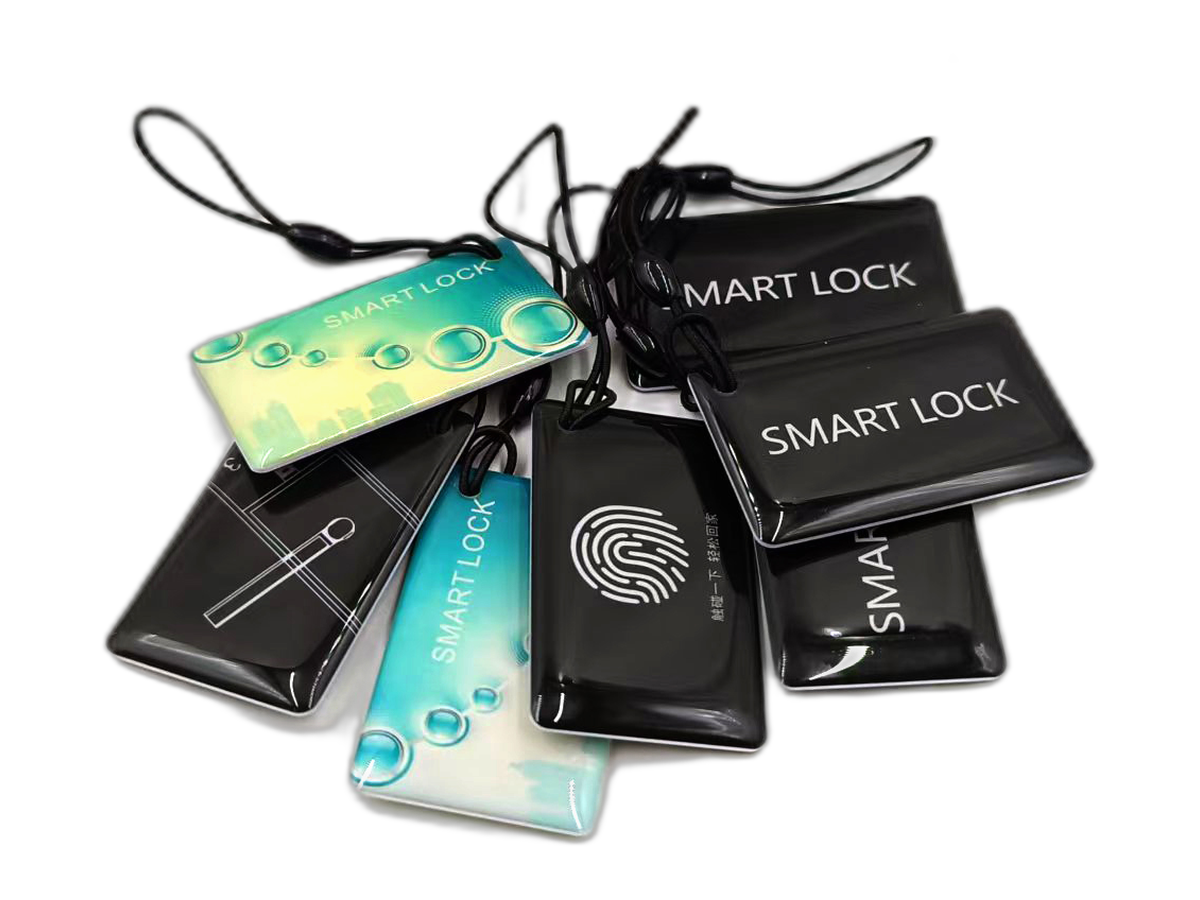
Artwork is printed on the base card first, then resin is mixed, dispensed, and left to cure; whether the edge is bordered depends on the use. Orders of different volumes follow the same process and inspection standards.
The resin forms a clear dome over the artwork with a 3D glossy surface, adding a tactile layer beyond flat printing.
0.5–1.2 mm thicker than a standard 0.76 mm card. Insert readers, card holders, and slots need clearance confirmed before thickness is set.
SPECIFICATION
Epoxy Cards: Standard Specifications
Epoxy cards distinguish base thickness from total thickness. Total thickness includes the resin; slot fit is judged by total thickness.
| Standard size | 50 × 30 mm; custom shapes per artwork |
|---|---|
| Thickness | Base 0.76 mm + resin about 0.5 mm up (thicker resin or key fobs are thicker); total about 1.3–2.0 mm |
| Base material | Card base + epoxy resin (dome layer) |
| Chip model | EM4100 / T5577 / Mifare Classic 1K (S50) / NTAG213, 215, 216; print-only chip-free versions also available |
| Operating frequency | 125 kHz / 13.56 MHz |
| Printing process | Base four-color offset / screen printing, surface epoxy formed |
| Optional finishing | Back screen printing, hot stamping, punching, stringing, bordered / unbordered |
| Sampling lead time | Schedule provided after artwork confirmation (includes resin cure time) |
| Production lead time | Schedule provided after artwork confirmation |
We produce cards to the chip model you specify; the chip is encapsulated inside the card. Writing and encryption are completed by your lock provider or hotel.
We only manufacture hotel key cards. We do not make door locks, nor provide smart-hotel or apartment systems, nor lock-system integration.
MOLD LIST
Existing Molds: Choose by Number
Epoxy card shapes are formed by molds. The table below lists common mold numbers, sizes, and shapes; after picking a number, verify thickness and slot clearance against artwork and chip model. For shapes not in the table, send the artwork to confirm the approach.
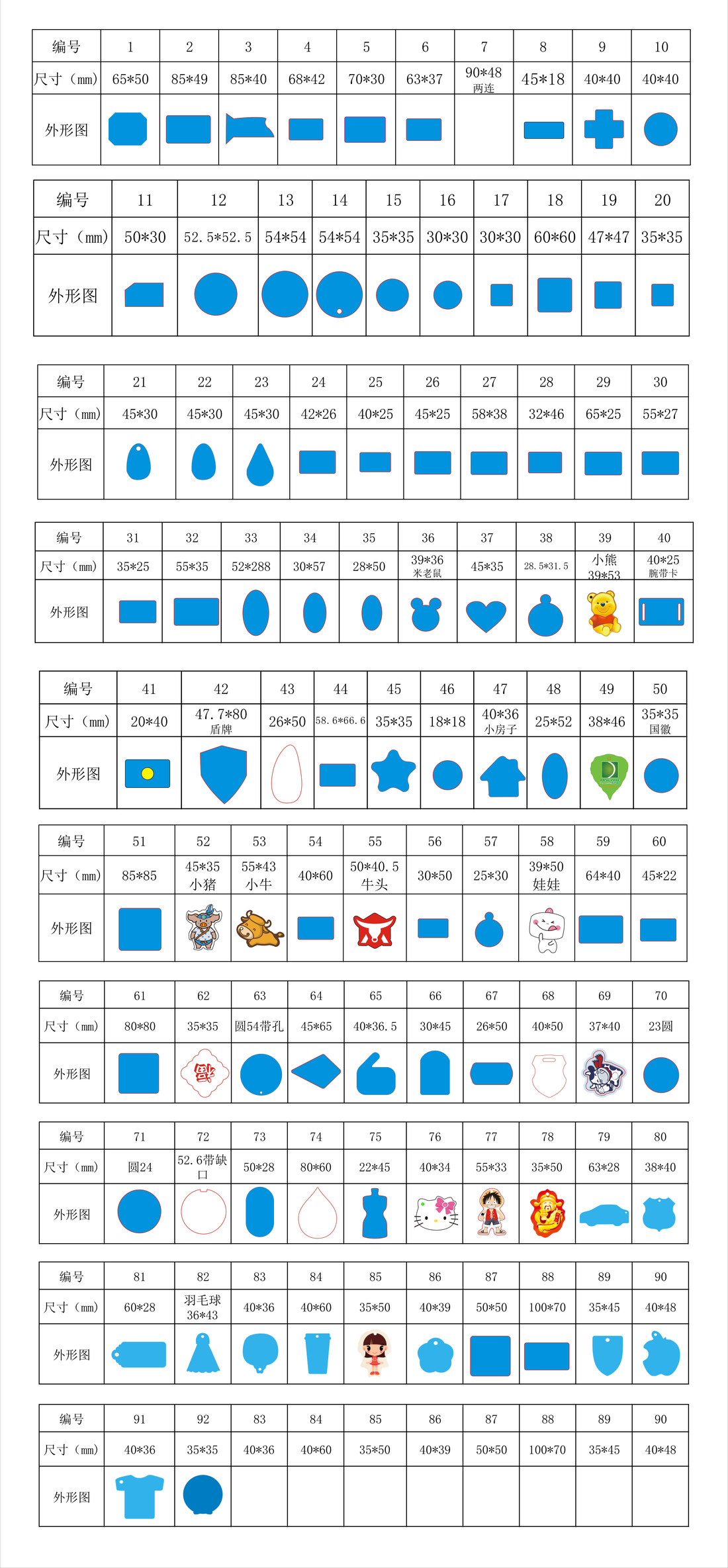
Dimensions in the table are mold outline sizes (mm); finished total thickness is also affected by the resin layer and chip. For insert use, confirm slot clearance first.
View large image ↗FINISHING
Overlay Surface Finishes
Epoxy is a surface-forming process: artwork is printed on the base then covered with resin; color fidelity depends on printing, dimensionality on the resin layer.
WHERE IT WORKS
Use Cases
Boutique hotels
Smaller hotels can use single-sided epoxy with a gold-foil logo, giving the card a 3D tactility beyond standard printing.
Resorts
The card is a souvenir itself. Crystal or custom-shape epoxy with a gift box serves as a checkout keepsake and can be produced with key fobs in the same batch.
Clubs / membership
Membership cards value feel and durability. Resin seals the print layer so daily friction does not scuff it; a club's membership batch can be produced with room cards in the same color.
Staff badges / keepsakes
Epoxy key-fob cards are punched and ringed, with base colors per department, and produced with room cards in the same batch.
FAQ
FAQ
Can epoxy cards be used as room keys?
A chip can be encapsulated inside to the model you specify. But epoxy total thickness is about 1.3–2.0 mm, thicker than a standard 0.76 mm card, so insert readers need slot clearance measured first; confirm thickness before setting chip and structure.
Will the epoxy yellow?
We use anti-yellowing resin; indoor normal use shows little change for years, while long sun exposure accelerates aging. Not advised for long-term outdoor signage; indoor membership and room cards are fine.
Can the artwork have gradients or photos?
Yes—UV print first then cover with resin for high color fidelity. But text under 4 pt blurs under resin refraction, so enlarge the font in design; thin lines should also be thickened.
How long for sampling?
Epoxy must wait for resin curing, slower than ordinary cards. After artwork confirmation we give a specific schedule, excluding your sample-approval time; book early in peak season.
Request a Quote
Provide the card type, quantity, total thickness, chip model, and surface effect. If slot clearance is unclear, send the device model or a photo of the slot.